AI agents are slot machines, or how I spent 2000€ in tokens in a week on OpenClaw

How it started
I remember the day OpenClaw (back then it was still called Clawdbot, then Moltbot, before Anthropic’s lawyers had a chat with Peter Steinberger) started getting serious hype. I was sceptical. I had been using Claude Code for months and I figured, what can OpenClaw possibly do that Claude Code can’t? Claude Code has skills, runs commands, edits files, builds whole apps, and now even controls your computer. What’s the angle?
I was wrong.
I decided to install it just to poke around. Giving an AI agent autopilot access to my main machine sounded like a recipe for disaster (and the fact that OpenClaw is largely vibecoded did not exactly calm my nerves), so I spun up a clean VPS. Anthropic API, Opus 4.5 to start (later Opus 4.6 when it dropped), Telegram as the chat channel. I named the bot Kent. Pressed start and waited.
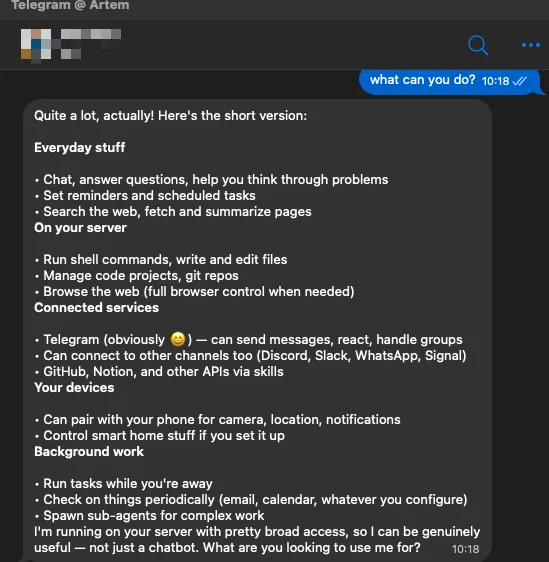
Three minutes to wow
I wanted to test something simple first. Connect my Gmail (read only, obviously) and have it flag important emails. Three minutes. It set up a pipeline that delivered urgent emails straight to Telegram as they arrived. I paused, stared at it, and my ADHD brain started racing.
Then I tried something bigger.
I told Kent, by voice message: “find me 20 SaaS companies in the Nordics doing 5 to 20 million in revenue, B2B, where SEO looks weak, and write me a cold email for each one.” He picked up Apollo.io for the prospect list, used Browserless to visit each company’s site, ran Perplexity to dig up recent news, cross-checked the SEO weakness through Ahrefs, and then drafted the emails. Each one referenced something specific and real about that company. Not “I noticed your impressive growth”, actual things. A product launch from last month. A job listing that hinted at a strategy shift. A blog post from their CEO.
Ten minutes later: “want to review them before I queue them up?”
I read through the drafts. They were better than what most junior SDRs would write by hand, and there were 20 of them.
This changes everything, I thought.
The honeymoon
I was in Asia with friends at the time. They kept asking why I was always on my phone. The answer was always the same: “I am talking to Kent.”
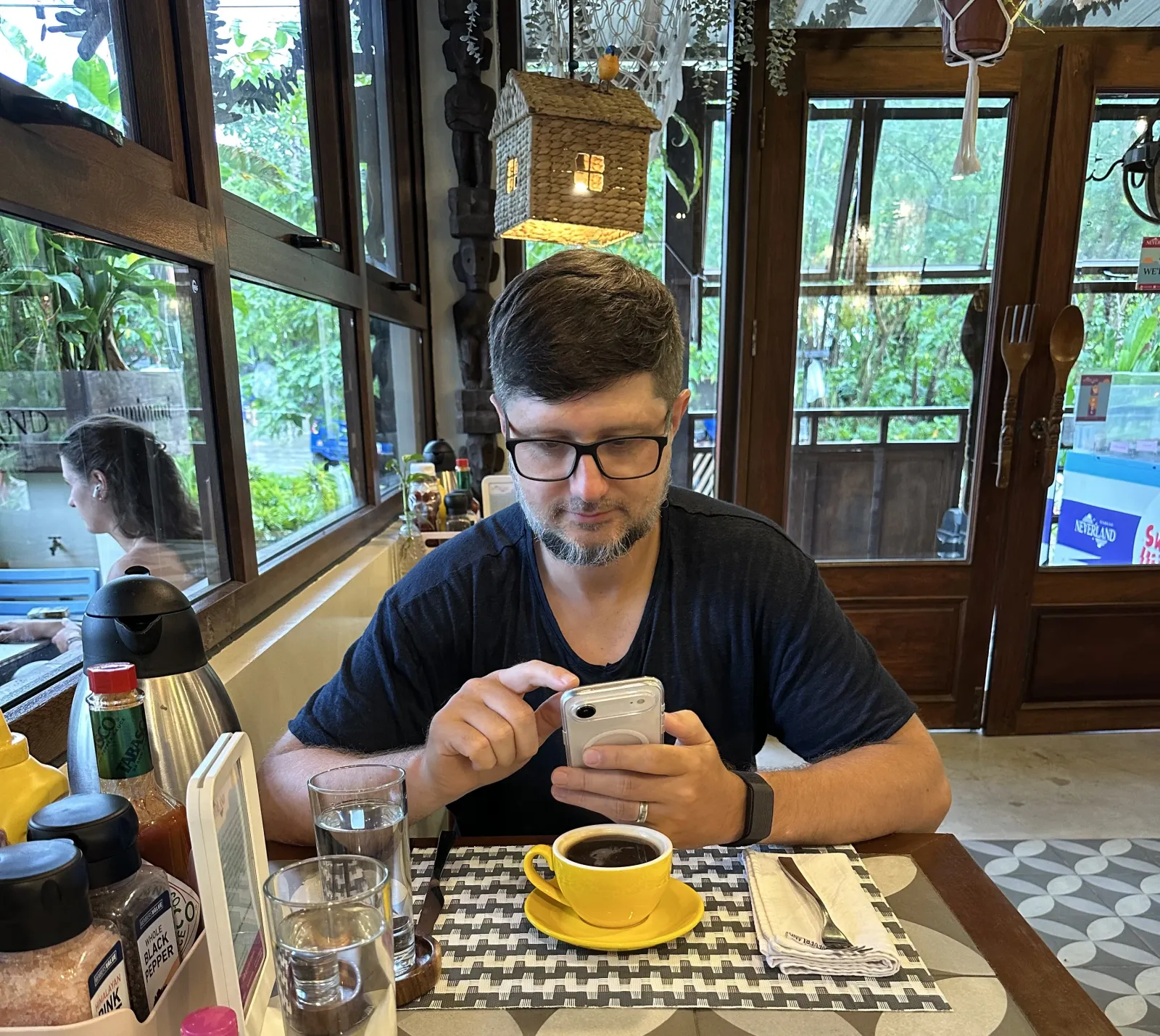
In a few days I had Kent doing:
- Daily news briefings from multiple sources
- SEO reports through the Ahrefs MCP
- Email triage so I could reply by voice
- On-demand podcasts on any topic I was curious about
- Prospect research for my agency
- Invoice creation through my accounting software
I felt like I had a super-powered assistant. I started sketching plans for my whole company to run on a fleet of OpenClaw bots. YouTube and TikTok were not helping. Every algorithm was showing me people achieving (allegedly) impossible things with OpenClaw. “SaaS is dead. Replace your team. Build a unicorn from your sofa.”
The bill arrives
I peeked at the API dashboard now and then. First few days when I was just testing, 20-30€ a day. Manageable. Fun money.
Then I started building real integrations and that is when OpenClaw’s architecture bit me. It chains prompts, loops, self-corrects, makes the model talk to itself a lot. 50€ a day. Then 100€. Then 300€. My peak was close to 1000€ in a single day when I was hammering it with complex tasks.
By the end of the week I had spent around 2000€.
Here is the part I did not see at first. Pulling that lever (sending Kent a prompt) felt like a slot machine. Sometimes you got garbage. Sometimes you got something incredible. The randomness, the variable reward, the “what will it do this time” feeling: that is the loop. That is the dopamine. Looking back, half of what I was doing was not productivity. I was pulling the lever to see what would come up.
And just like in a real casino, the house always wins. Anthropic, OpenAI, they are the house. They get paid per token whether your agent produces gold or garbage. The agent is the slot machine. You are the one feeding it coins.
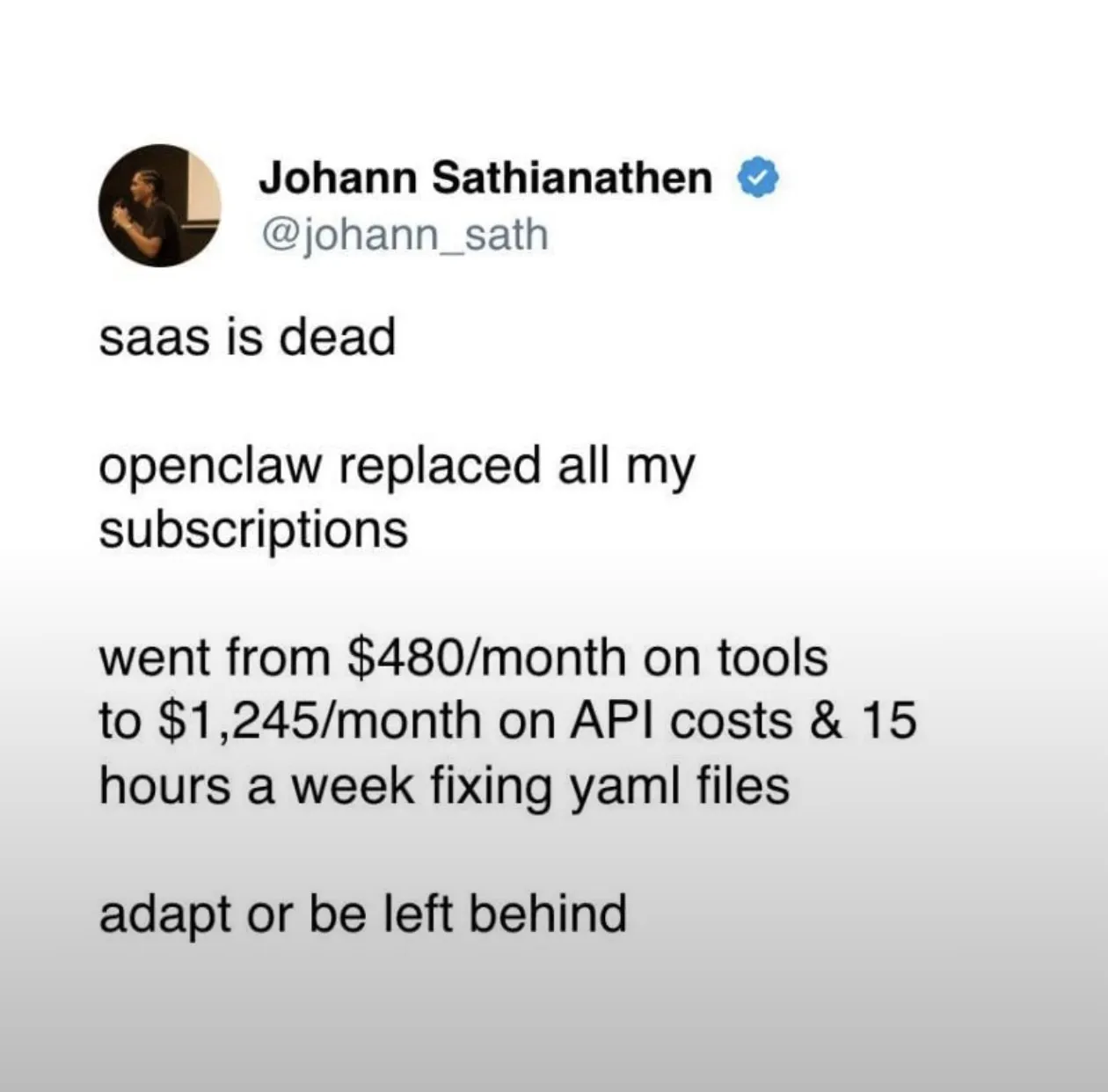
There is a viral tweet from Johann Sathianathen that captures this exactly:
The cracks
The honeymoon ended fast.
Every update broke something. I still have flashbacks of spending half an hour debugging a config file at 11pm because something changed between versions. Memory was almost impossible to get right. There are five different memory solutions in the OpenClaw ecosystem and none of them did what I needed. Output was inconsistent in ways that actually mattered. Ask the same thing twice, get different formats, different fields, different conclusions. So I started writing JSON schemas and templates to constrain it, which is funny, because the whole point was that I would not have to do that.
Then I tried switching models to save money. OpenAI Codex, Kimi K2.5, a few others. None felt as good as Opus. And every model swap broke something else, so I was reinstalling and reverting from git or ZFS snapshots every other day. (Thank god for Sanoid.)
At some point I sat back and realized: I am not using the agent. I am babysitting it.
The 80/20 trap
Here is what I wish someone had told me on day one.
Going from zero to wow with AI is super fast. You can build 80% of a working system in an evening. That is the part that makes everyone post their “look what I built in 60 seconds” videos. But the last 20%, the part that makes it actually reliable, that actually fits your real workflow, that does not embarrass you in front of a client, that part takes months. Maybe longer.
OpenClaw is unbeatable at the zero-to-wow phase. That is its magic and that is why it went viral. But once you cross into “I want to actually depend on this”, the math flips. Now you are paying premium token prices to babysit spaghetti code that the agent wrote at 2am while you were asleep.
Knowledge is the real edge
The deeper thing I figured out is this.
If writing software is approaching zero cost with agentic coding (and with Gemma 4 just released last week, agentic coding is genuinely affordable to run locally now), then the code itself is not what matters. What you put into the code is. Your know-how. Your processes. Your distilled experience.
It has always been like this, by the way. Everyone has access to Google Ads. Some agencies are great and some are terrible. Everyone has access to the internet. Some companies use it and some do not. The tool is never the differentiator. What you bring to the tool is.
So the way I see it now: the real edge is not in having a more autonomous agent. It is in distilling your knowledge into reusable skills, agent blueprints, and processes where a human stays in the loop as the quality gatekeeper. That is the part you cannot copy from a TikTok video.
Life after OpenClaw
I moved most of what Kent was doing back into Claude Code. The accounting workflow works there. The lead gen works there. Claude Code has a native Telegram integration now (it is in research preview and still a bit rough, but it will get there) and there are third-party bridges like CCGram if you cannot wait.
The big difference is how it feels. With OpenClaw I was pointing in a direction and hoping. With Claude Code I am driving. I ask it to plan first, approve the plan, then iterate. I move slower, but with intent, and the output is much higher quality. My AI costs are capped at 200€ a month (Claude Code Max subscription) instead of being a slot machine.
Remember that lead gen pipeline from the top of this post? It runs in Claude Code now, costs me nothing extra on top of my Max sub, and I trigger it from Telegram.
(Quick note: as of April 4, Anthropic banned using Claude Code Max subscriptions inside third-party harnesses like OpenClaw. So the “use your Claude sub to power OpenClaw” trick is dead. If you want to run OpenClaw on Anthropic models you have to pay the API rate, which is exactly what made my 2000€ week possible in the first place.)
OpenClaw is the Xerox PARC of personal AI agents. It showed everyone what was possible. Claude Code is going to be the Apple, the one that makes it actually usable.
If you still want to try it
Because I know some of you will :)
Don’t host it yourself. There are now dozens of services that run OpenClaw for you. Use one. The biggest source of pain in my week was managing updates and breakages, and that is exactly the part you can outsource for 20€ a month.
Don’t use Anthropic’s API to power it. Token cost is where it hurts. Use an OpenAI subscription instead (Anthropic just made it clear they don’t want their subs used in third-party harnesses anyway). At least your spend is capped.
Don’t give it personal data. Treat the whole thing as “this will go wrong, how do I make sure nothing bad happens when it does?” There are real horror stories of OpenClaw deleting things, getting compromised, leaking credentials. Run it isolated. Run it boring. Work up from there.
Don’t try to do everything in week one. Pick one workflow. Get it working properly. Then add the next.
If you are not married to OpenClaw specifically, look at Hermes by Nous Research. Newer and smaller, but built by people who train models for a living. Memory management is much better and they did a serious security hardening release in March. It feels like a tool, not a science project.
If you want something that will actually still be here a year from now, learn Claude Code. It is less exciting on day one. There is no “send a prompt and come back to a finished system” magic. But you will not be reinstalling it every Tuesday, and you will not be spending 1000€ in tokens to feel something.
That is the trade. Slower, more boring, more in your control, more sustainable. After my 2000€ week I will take it every time.
OpenClaw is the second time AI has made me feel actual magic. The first was the day I tried ChatGPT. That feeling is real and I am not trying to talk you out of it. Just know what you are buying when you do.